When the Event Loses Its Place
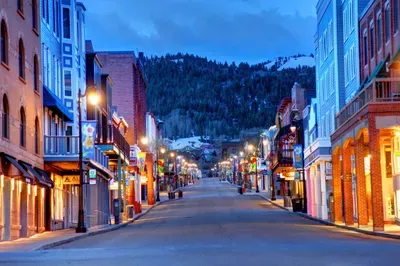
I’d frame it less as simply “Utah losing two events” and more around a bigger question: Can an event separate itself from the place that helped create its identity without losing something in the process? Outdoor Retailer is an especially interesting warning because it left Salt Lake once, returned, and has now left again for Minneapolis. Sundance gives us a chance to watch that experiment happen in real time.
For decades, certain events have become so intertwined with a place that it becomes difficult to tell where the event ends and the destination begins.
Outdoor Retailer and Salt Lake City were like that.
Sundance and Park City were even more so.
Now both have left Utah, and while much of the conversation naturally focuses on the economic impact to Utah, I think there is another question worth asking:
What does the event lose when it leaves the place that helped make it special?
More Than a Convention Center
Outdoor Retailer grew up in Salt Lake City.
For more than two decades, people from across the outdoor industry gathered in Utah to introduce products, make deals, reconnect with friends and talk about where the industry was headed. But the appeal wasn't simply the Salt Palace.
The Wasatch Mountains were right outside the door.
You could talk about skis in a convention hall and then actually go skiing. You could discuss climbing, biking, public lands and outdoor access while surrounded by one of America's great outdoor playgrounds.
That authenticity mattered.
Outdoor Retailer first left Salt Lake City for Denver following a very public disagreement over Utah's public-lands policies. It eventually returned in 2023, with organizers themselves describing Salt Lake as the place where the industry had "matured."
But in 2026 the show moved again, this time to Minneapolis, with Salt Palace reconstruction and logistics playing a significant role. Outdoor Retailer is already describing its Minneapolis chapter as a successful reset and has committed to returning there in 2027.
Maybe Minneapolis will prove to be a fantastic home.
But will Outdoor Retailer feel the same?
That is a harder question to answer on a spreadsheet.
Sundance Faces the Same Test
The Sundance Film Festival's relationship with Park City runs even deeper.
For roughly four decades, independent filmmakers, actors, producers, journalists and movie lovers descended on this small Utah ski town every January.
The snow mattered.
Main Street mattered.
The cramped theaters mattered.
Even some of the inconveniences mattered.
There was something wonderfully strange about seeing a film nobody had heard of in a little mountain theater, walking outside into a snowstorm and realizing that the director standing beside you might be the next major voice in filmmaking.
Park City wasn't merely hosting Sundance.
Park City became part of the Sundance experience.
Beginning in 2027, Sundance moves to Boulder, Colorado. Organizers have legitimate reasons for the move, including capacity, accessibility, cost and the opportunity to grow. Boulder also committed substantial financial incentives to bring the festival to Colorado.
Perhaps Boulder will be wonderful.
But again, there is a question that won't be answered until several years from now:
Will it still feel like Sundance?
The People Who Built Their Lives Around These Industries
There is another part of these decisions that receives far less attention.
What about the people who moved here because these industries were here?
Outdoor companies established offices in Utah. Entrepreneurs launched businesses here. Sales representatives, photographers, designers, guides and athletes built careers around Utah's outdoor economy.
The same thing happened around Sundance.
Filmmakers, production companies, photographers, hospitality businesses, event companies and countless independent contractors developed relationships and businesses around a festival that returned every January.
These ecosystems don't appear overnight.
They develop over decades.
An organizer can move an event with a contract and a press release.
You can't move an ecosystem quite so easily.
And that is where I sometimes wonder whether the people making these decisions fully appreciate what they are trading.
When Does an Event Become Bigger Than Its Organizer?
Every organization has to evolve.
Costs matter. Infrastructure matters. Politics can matter. Accessibility matters. And organizers absolutely have a responsibility to consider the long-term financial health of their events.
But there is a danger when a successful event begins treating its location as simply another line item available to the highest bidder.
At some point, repeatedly shopping an event around risks feeling less like strategic evolution and more like auctioning off a piece of its identity.
There is a crude way to put it: Are we eventually just whoring out great events to the highest bidder?
That may sound harsh, but the question deserves to be asked.
Cities increasingly compete for major events with tax incentives, subsidies, infrastructure commitments and marketing dollars. From the organizer's perspective, accepting a better financial package can make perfect business sense.
But history has value too.
Culture has value.
Authenticity has value.
And those things are incredibly difficult to put into a financial model.
Sundance Is Leaving Behind Real Economic Impact
This isn't nostalgia without numbers.
The 2025 Sundance Film Festival generated an estimated $196.1 million in economic impact in Utah, attracted more than 85,000 in-person attendees, supported approximately 2,700 Utah jobs, generated $103.3 million in wages and produced more than $21 million in state and local tax revenue.
Those dollars don't simply disappear into hotel corporations.
They reach restaurants, bartenders, drivers, housekeepers, vacation rentals, caterers, photographers, equipment companies and hundreds of small businesses.
When an institution that has spent decades embedding itself into a community leaves, the consequences extend well beyond the official venues.
But Utah Isn't the Only One Taking a Risk
It is easy to frame these stories as Utah's loss and Minneapolis' or Colorado's gain.
I'm not convinced it is that simple.
Outdoor Retailer has to prove that the industry will follow the event rather than merely attend it.
Sundance has to prove that Sundance itself — rather than Sundance in Park City — was always the attraction.
Boulder certainly shares some characteristics with Park City: mountains, outdoor culture, progressive attitudes, a walkable downtown and an educated population. Sundance believes those qualities will allow the festival to preserve its character while expanding its audience.
I hope they're right.
Because events can absolutely reinvent themselves.
But they can also slowly become something else.
You Can't Manufacture History
There is an irony in all of this.
Organizations spend enormous amounts of money trying to create authenticity.
They hire branding firms.
They develop origin stories.
They talk about heritage, community and tradition.
But Outdoor Retailer already had those things in Salt Lake City.
Sundance already had them in Park City.
They were earned over decades.
You can move booths, screens, sponsors, executives and signage to another city.
You can offer better facilities.
You can create bigger venues.
You can negotiate better economics.
But you cannot relocate history.
The real test won't be Outdoor Retailer's first year in Minneapolis or Sundance's first year in Boulder. New locations almost always generate excitement.
The test will come five or ten years later.
Will attendees still feel the same anticipation?
Will companies still consider attendance essential?
Will filmmakers still dream about "going to Sundance" in quite the same way?
Will the next generation form the same emotional connection to these events?
Maybe they will.
But Utah's experience with Outdoor Retailer and Sundance offers a reminder to every major event organizer:
Sometimes the place isn't simply where your event happens.
Sometimes the place is part of what made your event matter in the first place.
And once you leave that behind, no amount of sponsorship money can guarantee you'll ever recreate it.
I deliberately kept the “whoring out” line because it gives the piece some teeth, but framed it as the provocative question rather than the conclusion. I also think the “you can move an event, but you can’t move an ecosystem” idea is the strongest theme here and could make a great pull quote or social post promoting the blog.
Ready for your own slow weekend?
Browse the homes at the end of the dirt road — every one vetted, booked direct, no platform in between.